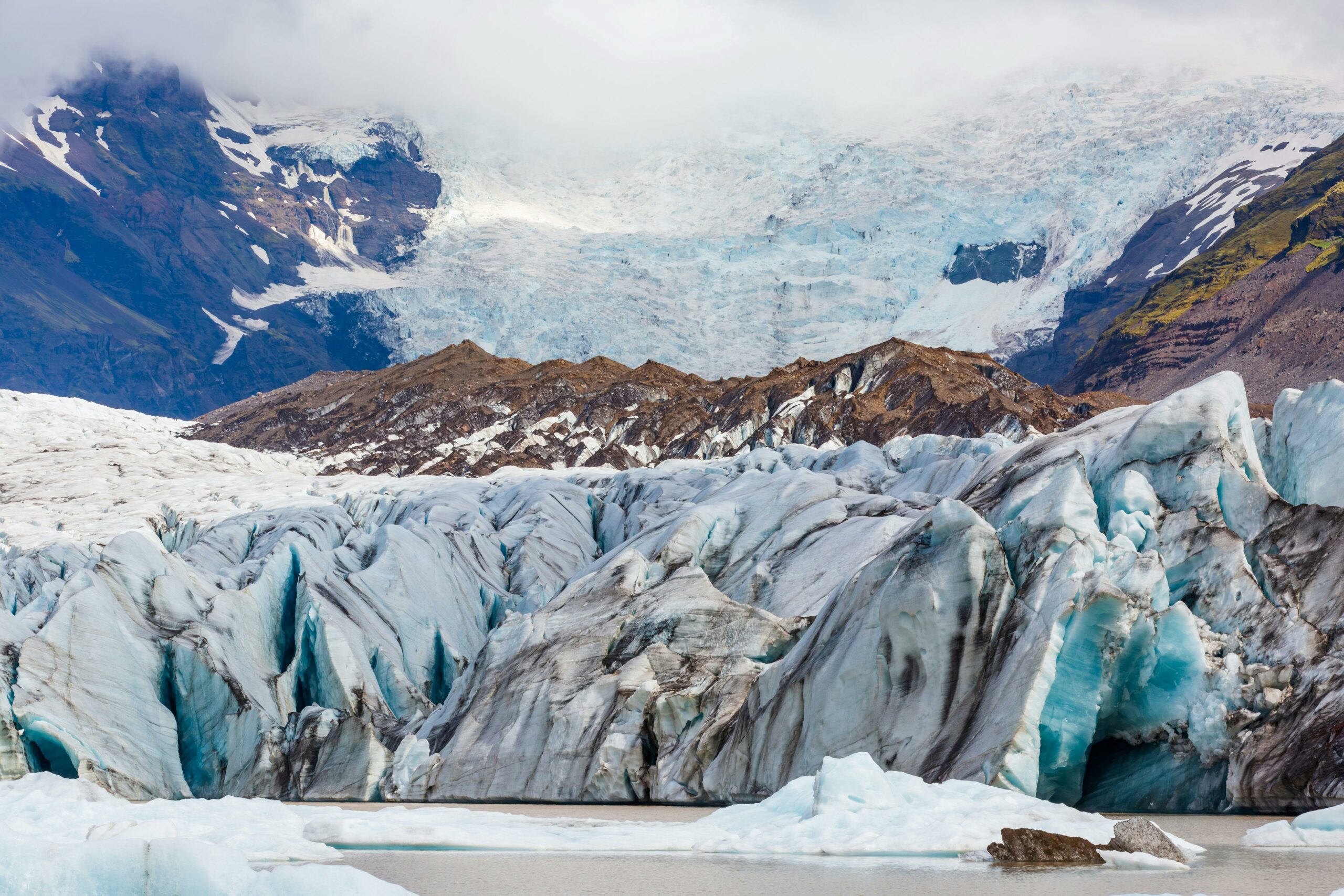
Glacier Bay Camping: The Complete Guide to an Unforgettable Nature Stay
Let’s be honest – Glacier Bay is not your average camping destination. This is Alaska. Real Alaska. The kind where you wake up at 5am because a humpback whale just breached 200 meters from your tent, and you’re not even sure anyone would believe you back home. If you’re thinking about camping in Glacier Bay National Park, you’re already making one of the best decisions of your travel life. But you need to be prepared, because this place doesn’t forgive careless planning.
Before we get into the details, a quick note for those who love the camping lifestyle more broadly : if you’re also exploring camping options in France or Europe for another trip,the folks at www.camping-club-vacances.fr offer some solid club-style camping experiences worth checking out. But today, we’re fully focused on the wild north.
What Makes Glacier Bay So Special for Campers
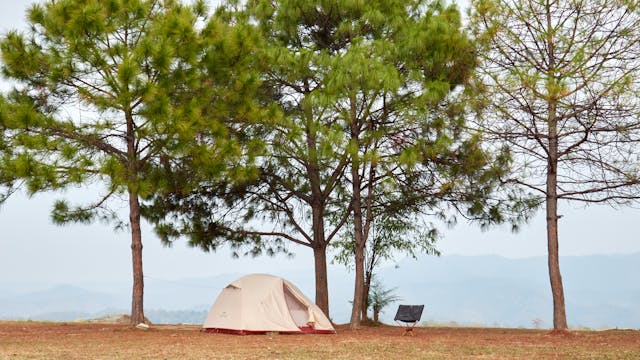 Glacier Bay National Park covers roughly 3.3 million acres in southeastern Alaska. That’s enormous. And the vast majority of it is completely roadless. No highways cutting through the forest, no parking lots next to the viewpoints. To reach the glaciers, you go by boat or you walk. That’s it. Frankly, that’s exactly what makes it so extraordinary.
The park sits in a UNESCO World Heritage Site. The landscape is a living lesson in geological time – massive tidewater glaciers calving directly into the sea, mountains rising over 4,000 meters, and ecosystems that were buried under ice just 250 years ago. The rebound of vegetation and wildlife since then is called glacial rebound succession, and honestly, watching it happen in real time, even just visually, is kind of mind-blowing.
The Only Real Camping Option : Backcountry, All the Way
Here’s something that surprises a lot of people : there is no developed campground in Glacier Bay National Park. No Yogi Bear campsite with electrical hookups and a camp store. The park offers one option – backcountry camping, dispersed and wild, almost anywhere within the park boundaries.
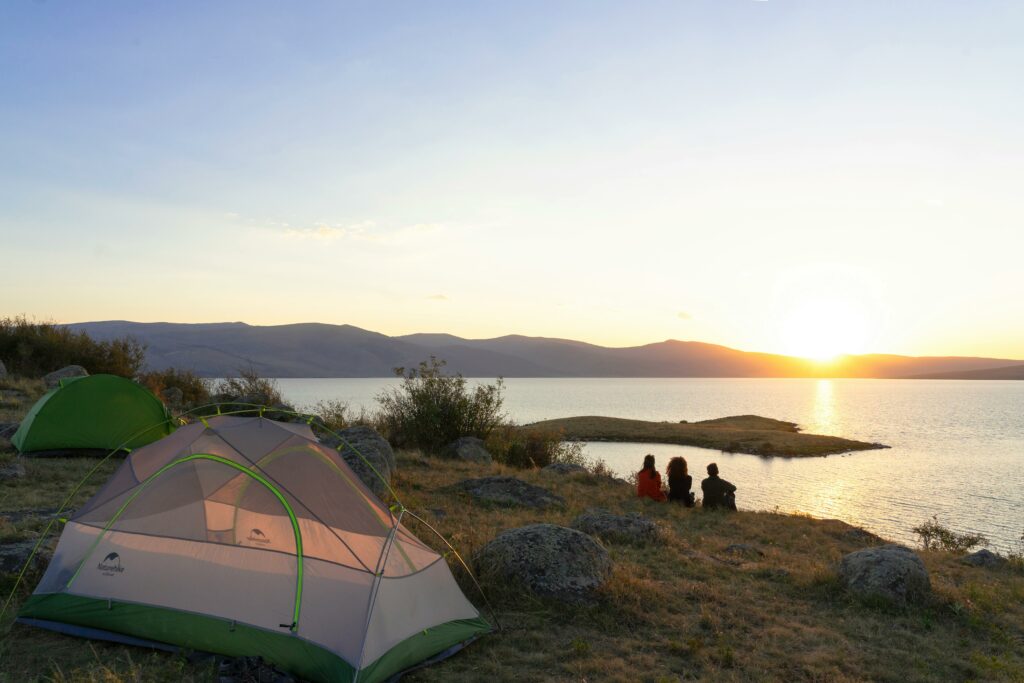
That means you’re camping on beaches, riverbanks, or forest edges. You choose your spot. You set up your tent wherever you land – literally, in many cases, because most visitors arrive by kayak or boat drop-off.
Is it intimidating ? Maybe a little. But once you’re out there, with nothing between you and that glacier except a few miles of cold sea air, the freedom feels incredible.
How to Get There (It’s Not Simple, But That’s the Point)
Glacier Bay is not accessible by road. The gateway town is Gustavus, Alaska, a tiny community of around 450 people. You can reach Gustavus by :
Small plane from Juneau – Alaska Airlines and smaller regional carriers operate flights, roughly 30 to 45 minutes. It’s the quickest option and honestly pretty scenic.
Ferry via the Alaska Marine Highway System – slower, but a real experience in itself if you have time.
From Gustavus, it’s about 10 miles to Bartlett Cove, where the park headquarters and visitor center are located. That’s your starting point for everything.
Getting a Backcountry Permit : Don’t Skip This Step
You must register for a free backcountry permit before heading out. You do this at the Backcountry Desk inside the visitor center at Bartlett Cove. There’s no online reservation system for this – you show up in person. That’s a bit unusual in 2024, I know, but it’s part of how the park manages visitor flow and keeps track of who’s out there.
At the permit desk, a ranger will go over your route, give you a bear canister if you need one (required for food storage), and brief you on Leave No Trace rules. It takes maybe 30 minutes. Don’t skip this briefing – the rangers know the current conditions and that information is genuinely useful.
Bear Safety : This Is Serious Business
 Let’s talk about bears, because camping in Glacier Bay means sharing the landscape with both black bears and brown bears. Not metaphorically. Literally. You will likely see bear tracks on the beach. You might see a bear in the distance. Maybe closer.
The rules are simple but non-negotiable :
– All food, garbage, and scented items go in the bear-resistant canister at all times when not in use.
– Cook and eat at least 100 meters from your sleeping area.
– Never keep food in your tent. Ever.
– Make noise when you’re moving through brushy terrain.
Perso, I find the bear awareness aspect of Alaskan camping actually sharpens your senses in a good way. You become more present. More attentive. It’s not paranoia – it’s respect for the ecosystem you’re visiting.
What to Pack : The Non-Negotiables
Glacier Bay weather is notoriously unpredictable. Even in July, temperatures can drop sharply, and rain is basically a given at some point. Here’s what you genuinely need :
Shelter and sleep :
– A four-season tent or at least a solid three-season model with a good rain fly
– A sleeping bag rated to at least -5°C (23°F), even in summer
– A sleeping pad with solid insulation (R-value 4 or higher)
Clothing :
– Waterproof jacket and pants – not water-resistant, actually waterproof
– Wool or synthetic base layers (no cotton – it kills when wet)
– Warm mid-layer like a fleece or down jacket
– Waterproof boots with ankle support
Navigation and safety :
– Topographic maps and a compass (don’t rely solely on your phone)
– A personal locator beacon (PLB) or satellite communicator – this is Alaska, cell service is nonexistent
– First aid kit
Food and water :
– Water filter or purification tablets – there are freshwater sources, but you treat everything
– High-calorie, lightweight food for the duration plus one extra day
One thing people underestimate : the weight of wet gear. Pack smart, pack light, but don’t sacrifice warmth and safety for grams.
Getting Around Inside the Park
Most campers in Glacier Bay use sea kayaks. The park’s waterways are spectacular for paddling, and it’s how you access remote inlets and glacier faces that are otherwise unreachable. You can rent kayaks in Gustavus or through outfitters near Bartlett Cove.
The park concessioner, Glacier Bay Lodge, operates a daily tour boat that runs up the bay and can drop off and pick up kayakers and campers at specific points. This is a great option if you want to penetrate deeper into the park without paddling the entire distance. Book in advance – spots fill up.
If you’re not a kayaker, you can still camp near Bartlett Cove and take day hikes in the area. It’s a different experience, less remote, but still absolutely worth it.
Best Time to Visit for Camping
The park is officially open year-round, but realistically, late May through early September is the window for camping. That’s when the tour boats run, the water is navigable without sea ice concerns, and daylight is maximized – we’re talking 18 to 20 hours of light in June. It’s surreal.
July and August are the most popular months. If you want fewer people and don’t mind cooler temperatures, late May or early September can be magical. The light has a different quality in shoulder season. Softer. More golden.
Avoid planning a trip without checking the National Park Service website for current conditions and any seasonal closures, particularly around sensitive wildlife areas.
Wildlife You’ll Actually See
This is one of those places where the wildlife list reads like fiction. In Glacier Bay, encounters with the following are realistic and frequent :
– Humpback whales – feeding in the bay, especially in summer
– Orcas – less common but present
– Harbor seals resting on icebergs near the glaciers
– Sea otters floating on their backs doing sea otter things
– Brown and black bears along the shoreline
– Mountain goats on the cliffs above the waterline
– Bald eagles – constantly, everywhere
Honestly, the wildlife density here surprised me. You expect it intellectually, but actually seeing a group of harbor seals draped across a floating chunk of glacial ice while a whale surfaces 50 meters from your kayak – that’s something else entirely.
A Few Practical Things People Forget
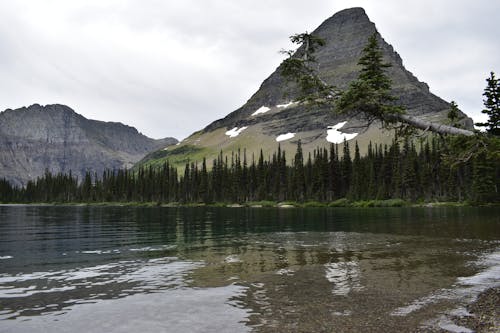 Tides matter enormously. If you’re camping on a beach and you don’t check the tide table, you might wake up with water around your tent. Always camp above the high tide line. The rangers at the permit desk will tell you exactly where that is for your planned area.
There is no trash collection in the backcountry. Everything you bring in, you carry out. No exceptions.
Fires are restricted in most of the park. Bring a lightweight camp stove. Driftwood fires are allowed in some beach areas below the high tide line, but check current regulations at the visitor center.
Glacier noise is real. Sleeping near an active tidewater glacier means occasional loud cracks and rumbles as ice calves. It’s not dangerous at a reasonable distance, but it can startle you awake. Some people find it incredible. Others find it unsettling. You’ll figure out which camp you’re in pretty quickly.
Is It Worth the Effort ?
Completely. Without hesitation. Glacier Bay camping requires planning, gear investment, and a tolerance for unpredictability. But what you get in return is something most people never experience in their lives – genuine wilderness, on a geological scale, where the landscape itself is still actively changing.
The glaciers are retreating. That’s a fact. Scientists and park rangers will tell you openly that what you see today will not exist in the same form in 50 years. That gives the trip an urgency that I find both motivating and a little sobering.
Go while it’s still this wild. Plan carefully, respect the environment, and let Alaska do the rest.